

by Loini Iizyenda (University of Namibia), Maria A. N. Caley (University of Namibia)
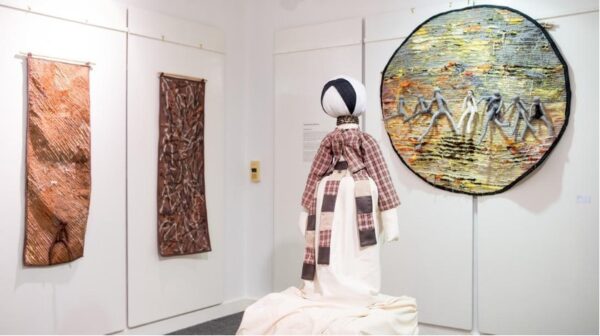
‘Uatunua ma peua ondongero ndjijemupuire’ by Betty Tuaovosia Katuuo Photographer: Willem Very (2021)
Abstract
Dolls have been significant objects within many communities in Africa. In the same vein, various ethnic groups in Namibia created dolls from different materials and for different uses. Oral accounts confirm that not all dolls were the same, as their purposes varied from individual to individual. For example, some dolls were sacred and connected to rituals regarding fertility, while others were made to play with or to usher an initiated girl into womanhood. The materiality of the doll also represented the owner’s status or clan and determined their function. Many rare Namibian dolls can be found in both private and public archives and collections far from the communities that created them. While these dolls were primarily collected simply due to their intriguing nature, the practices surrounding them and their connotations may have been lost or distorted over the period since their removal from their communities, with artifacts in collection dating from the mid-19th century. Many discourses have explored political, ethical, and legal issues in the debates around the rise of the restitution of cultural objects. In this article, we focus on how Namibian creatives have responded to the recently repatriated Namibian dolls. We draw from existing literature, archives, and interviews with Namibian artists to gain insight. The main aim is to highlight how Namibian creatives make “new” use of repatriated dolls as means for finding inspiration and self-awareness. It is important to include their voices and innovative process as a visual reference for the Namibian creatives’ response to restitution. Here, we explore creative practice to address a gap in academic research on Namibia regarding the question of restitution.
This article will be published in the Special Issue “Repatriation and Contemporary Art”, edited by Khadija von Zinnenburg Carroll, Jessyca Hutchens and Verena Melgarejo Weinandt
Loini Iizyenda is a fashion and textile lecturer at the University of Namibia, with an MA in Sustainability in Fashion from Esmod Berlin University of Arts for Fashion (Germany). Her research area focuses on the symbolic representations of elements in the pre-colonial traditional costumes of Aawambo people in Namibia and formation of the contemporary cultural identities. Her article related to this research is titled The impact of Finnish Missionaries on traditional Aawambo dress featuring in the publication called Intertwined histories-150 years of Finnish-Namibian Relations. Iizyenda’s doctoral studies explore the symbolic connotations of the metal beaded ornaments. In practice Iizyenda explores product development using prints inspired by traditional ornaments and sustainable design strategies such as Upcycling and traditional handcraft techniques. Loini Iizyenda was an active advisory committee member, responsible for facilitating the establishment of the Museum of Namibian Fashion.
Maria A. N. Caley is a lecturer at the University of Namibia, who specializes in Textiles and Fashion Design in the Department of Humanities and Arts. Her undergraduate work included Fashion and Textiles which both covered an intensive amount of studio work; where she created fashion and textiles work of high quality with a signature style still in use to date. Her work has been showcased in Australia, Angola, Cuba, Finland, France, Germany, Ghana, Mozambique, Niger, Nigeria, South Africa and the United States of America. Her creative and academic work strives toward changing the narrative and creating textiles and fashion that reflects the Namibian culture in the hope of creating a Namibian identity. Her research interest is in fashion created out of Africa, the formations and transformations of African fashion. Her MA thesis title A study of Vakwangali traditional clothing for fashion creation in Namibia had explored traditional clothing of Vakwangali and transformed ideas from it into modern fashions. Caley has contributed to a book chapter Intertwined Histories: 150 Years of Finnish–Namibian Relations, where her chapter explored the entanglements between trade cloth and indigenous crafts. Her resent involvement with museum projects has created interest in research work that engages the archives and practice. Caley is currently involved with the Museums Association of Namibia, which has spearheaded and facilitated the making of Museum of Namibian Fashion.