

by Ariadna Solis (National Autonomous University of Mexico UNAM)
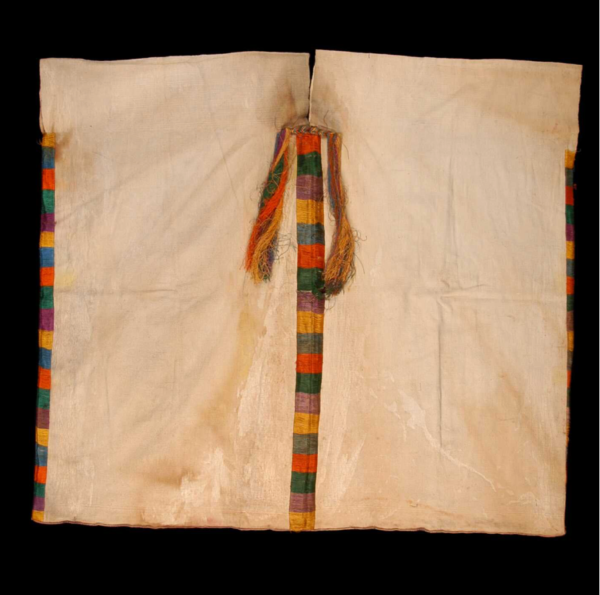
Huipil in musée du Quai Branly – Jacques Chirac, in Paris
Abstract
Through the history of textiles in my community, particularly of the huipil and practices associated with its weaving and burial, this paper questions the colonial and extractive meanings of patrimony, heritage, conservation and repatriation. While ostensibly linked to the protection and valuing of heritage, I argue that such terms and discourses have often served to dislocate indigenous values and practices, including dynamics of returning objects to the land and understanding their embedded meaning within territories, communities, and knowledge systems and the mediation of memories. Against western logics of preservation, actions such as re-burial challenge nationalistic notions of cultural memory and value. Huipiles, a garment considered indigenous, is present in most of the anthropological, archaeological and ethnographic collections in the world, where they remain detached from cultural meanings and practices. Such textiles have often remained within the limited disciplinary framing of anthropology and generally left outside of the art history canon. As contemporary artistic practices have pushed the discipline towards an interest in artist’s critical engagements with museums –from projects which challenge the typologies of the museum, to archival art and artistic research, to experimental forms of cultural re-vitalisation, art history has still struggled with non-western epistemologies which do not valorise the art object as separable from cultural cycles, dynamics and vitalities. The idea of re-burial – an inherent part of the subjecthood of huipiles and their makers / wearers – is a part of many cultural and artistic forms. Today, a younger generation of artists, curators, and researchers like myself have become interested in restoring the cultural memories and dynamics of these materials – a form of art history and practice that must encounter the often limited documentation of them in museum collections around the world and the whispers of agency contained in these archives, and the cultural universes that remain tethered to them outside in their home territories and communities.
This article will be published in the Special Issue “Repatriation and Contemporary Art”, edited by Khadija von Zinnenburg Carroll, Jessyca Hutchens and Verena Melgarejo Weinandt
Ariadna Solis is a PhD candidate in Art History at Universidad Nacional Autónoma de México (UNAM). She is a second-generation migrant Yalalteca woman. She is a political scientist and art historian from UNAM and dedicated to research, writing, teaching, curating and different textile works. She is currently part of the collective Dill Yel Nbán, a group for the transmission and dissemination of Zapotec language and culture.