

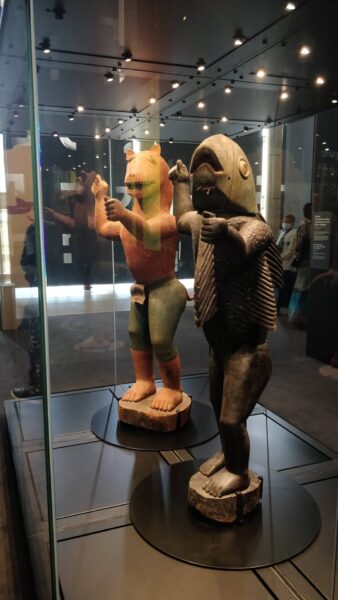
Following an art historian’s methodology, this book examines the framework within which artefacts, meant for the court and ceremonies structuring social life in the Kingdom of Danxomè, were created. An important feature of this West African kingdom is the way its culture evolved assimilating subjugated foreign religious entities. Marital alliances, often forced, fostered this cultural diversity. They were the outcome of military conquests involving spoils of war such as objects and human beings.
The analysis highlights the tight links between politics, society and court art. The location of the objects making up the treasure and the staging of the parades are documented by the accounts of travelers, merchants and diplomats received at the Dahomeyan court. The author undertakes an in-depth study of the transformation in the status of the works. From war trophy to masterpiece of universal art, the artefacts have carried a meaning, from yesterday to today which goes beyond their own materiality.
The book also puts forth the essential bond between the king and the works of art. He is both their patron and sponsor, assigning them a function by sanctifying their role in society. The political and social role of court art is a reflection on the concept of heritage and it is based on the particular evolution of the court art of the kings of Dahomey.
https://www.lespressesdureel.com/EN/ouvrage.php?id=7016&menu=0